

Year-End Bookkeeping Checklist for Small Businesses: Get Ready for Tax Season
Prepare your business books for tax season with a year-end bookkeeping checklist covering income, expenses, account reconciliation, and records.

Journaling is a powerful tool for students of all ages. Whether you’re a parent looking to encourage reflection at home, an educator seeking to build writing confidence, or a student wanting to develop better organizational and emotional skills, journal prompts offer a structured way to begin.
Research shows that regular journaling practices support:
This guide offers 75 age-appropriate journal prompts organized by school level—elementary, middle school, and high school—plus guidance on how to make journaling a meaningful routine.
Many students feel anxious about formal writing assignments. Journal prompts remove the pressure of grades or judgment. Students can experiment with language, make mistakes, and take creative risks in a low-stakes environment. Research in writing pedagogy shows that anxiety and perfectionism kill authentic writing. When students know their work won’t be heavily graded or judged, they relax and write what they actually think. This repeated experience of successful, safe writing builds genuine confidence.
Life moves fast, especially for young people. Journaling slows things down and creates space for reflection. Students explore what they’re learning, how they’re growing, and what challenges they’re facing—all essential for developing self-awareness. When students write about what they’ve learned, they’re forced to organize their thinking, identify gaps in understanding, and connect new information to prior knowledge. This process, called elaborative encoding, is one of the most effective learning strategies available. Educational research finds correlations between reflective writing practices and improved academic outcomes, particularly in reading comprehension and conceptual understanding.
Keeping a journal is a form of emotional processing. Expressive writing has documented benefits for stress reduction and emotional regulation, both of which support academic performance. Students who write regularly often report reduced anxiety, improved mood, and better ability to manage stress. It’s a tool they can carry through their entire lives.
When students write about their goals, they’re more likely to achieve them. Research on goal-setting shows that explicitly writing down goals significantly increases the likelihood of achieving them. Journaling helps students organize thoughts, prioritize action steps, and track progress over time.
Well-designed prompts push students beyond surface-level thinking. They encourage analysis, perspective-taking, and problem-solving—skills that transfer to every subject and life situation.
Choose a regular time: Set a specific time each day or week for journaling—perhaps first thing in the morning, after school, or before bed.
No editing required: Journaling is about thinking and expressing, not perfection. Spelling and grammar can wait.
Mix and match: Some students prefer writing; others draw, create lists, or combine both. Let students find what works for them.
Return to favorites: If a prompt resonates, return to it weeks or months later. Students’ responses often reveal growth over time.
Create privacy: Make sure students feel their journal is a safe, private space. Reassure them that journaling is for them, not for grades or evaluation.
These prompts invite imagination, play, and simple reflection. Many work well with drawing or a mix of words and pictures.
These prompts invite deeper reflection on identity, relationships, change, and emerging interests. They’re designed for students navigating social dynamics and self-discovery.
These prompts invite critical analysis, future planning, ethical reasoning, and deeper self-reflection. They’re designed for students thinking about identity, values, and life direction.
Start with simple, open-ended prompts rather than complex ones. Many students benefit from drawing first, then adding words. You can also ask them to finish a sentence: “Today I felt…” or “Something I’m thinking about is…”
Privacy builds trust. If you want to read journals, ask permission first and establish clear boundaries about what will and won’t be graded. Some teachers use journals as low-stakes writing practice but focus feedback on clarity and effort rather than judgment. Let students know your reading policy upfront.
Even 5–10 minutes a few times per week makes a difference. Consistency matters more than duration. Some students journal daily; others prefer weekly longer entries. Let students find a rhythm that works for them.
If a student writes about self-harm, abuse, or serious distress, take it seriously. It’s not a violation of privacy to follow your school’s mandatory reporting protocols or to connect the student with a counselor. Frame it as care, not punishment.
Yes. When combined with gentle feedback focused on clarity and voice (not grammar), journaling builds fluency and confidence. Over time, students naturally improve sentence variety, word choice, and organization because they’re writing frequently in a low-pressure setting.
Minimal. A notebook and pen are enough. Some students prefer blank journals for drawing; others like lined notebooks or digital formats. Let students choose what appeals to them—they’re more likely to stick with it.
Remove the pressure. Offer multiple formats: writing, drawing, lists, comics, voice recordings, or a mix. Let them choose their own prompts or start with lighter, more playful prompts. Sometimes a daily 2-minute challenge feels more manageable than an open-ended journal time.
Research in educational psychology shows that reflective writing—journaling included—deepens learning retention and transfer. When students write about what they’ve learned, they’re forced to organize their thinking, identify gaps in understanding, and connect new information to prior knowledge. This process, called elaborative encoding, is one of the most effective learning strategies available. Furthermore, expressive writing has documented benefits for stress reduction and emotional regulation, both of which support academic performance.
Studies show regular journaling correlates with reduced anxiety and improved emotional well-being, particularly when students use it to process difficult feelings or experiences. The act of externalizing thoughts—getting them out of your head and onto paper—provides psychological relief and often leads to new insights about problems. This is why journaling is frequently recommended as a complementary tool alongside therapy or counseling.
Research suggests handwriting activates more brain regions related to learning and memory than typing does. Many educators recommend handwriting for reflective journaling to maximize cognitive and emotional engagement. That said, some students will only journal if they can type, so the “best” method is the one they’ll actually use consistently.
Journaling is a core practice in SEL frameworks because it develops self-awareness, emotional regulation, and responsible decision-making. When students journal about relationships, challenges, and values, they’re practicing perspective-taking, empathy, and reflective thinking—all competencies that research links to better academic outcomes, healthier relationships, and improved well-being.
Prepare your business books for tax season with a year-end bookkeeping checklist covering income, expenses, account reconciliation, and records.

Find the right bookkeeping books for your business. Compare monthly and weekly records, payroll books, check registers, mileage logs, and more from Dome.

Help Others Find Tools That Keep Life Moving The right tools can make everyday work, planning, record-keeping, reflection, and self-care feel more manageable. For generations,
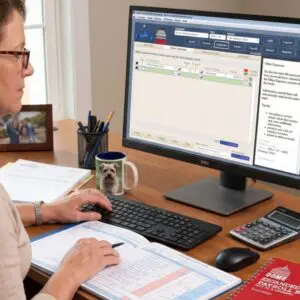
Compare physical record keeping books for business against digital accounting software. Learn IRS compliance facts, security risks, and how to build an accurate hybrid system.
Receive news and promotions by email from The Dome Companies. You can unsubscribe whenever you want.
By submitting this form, you are consenting to receive marketing emails from the Dome Companies. You can revoke your consent to receive emails at any time by using the unsubscribe link, found at the bottom of every email. We will not sell your inforation.