Lined vs. Blank Journal: Which One Is Right for You?
Journaling & Writing
Choosing between a lined journal and a blank journal may seem simple, but the difference can shape how you write, plan, sketch, and journal every day. Some people love the freedom of a blank page, while others prefer the structure of lines that make writing feel easier and more organized.
Both options have their strengths. A blank journal can feel inspiring and open-ended, while a lined journal can feel approachable and practical. The best choice often depends on how you like to think, write, and use your journal.
Why a blank journal feels so fresh
There’s something exciting about opening a brand-new blank journal. The pages are clean, the cover is untouched, and the possibilities feel wide open. Whether you want to write, sketch, brainstorm, or simply keep a personal space for your thoughts, a blank journal can feel full of potential the moment you open it.
That openness is part of the appeal. A blank journal gives you complete freedom to use the page however you want. There are no lines to follow, no prompts to answer, and no built-in structure to work around.
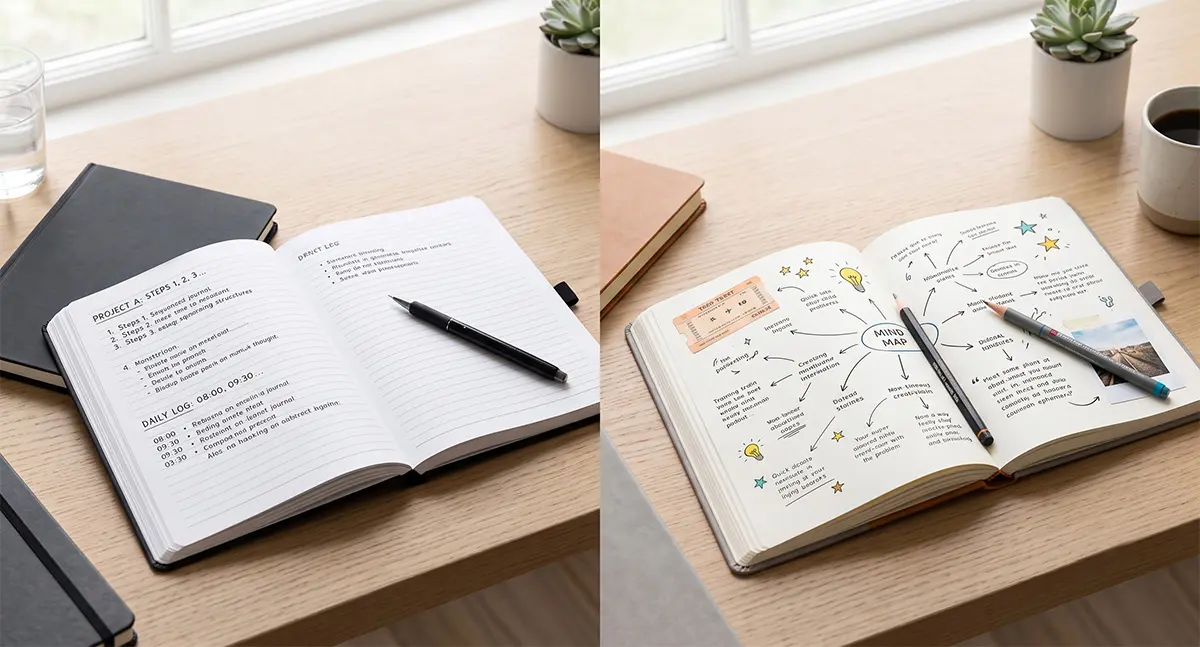
For creative thinkers, that freedom can feel energizing. It allows for mixed media, mind maps, visual planning, and free-form ideas without constraints.
Why a blank page can feel intimidating
That same freedom can also make a blank journal hard to start. A clean page can feel almost too perfect, especially if you worry about making a mistake or “ruining” the first page.
Many people hesitate because they feel pressure to make the first entry meaningful. Others worry about their handwriting, their layout, or whether the page should look polished. Instead of feeling inspiring, the blank page can start to feel high-stakes.
That’s why the first page of a blank journal can be the hardest part. Once the pressure is gone, the journal often becomes much easier to use.
Why lined journals feel easier to use
A lined journal removes some of that pressure by giving your thoughts a natural path to follow. The lines create structure, which can make the writing process feel simpler from the start.
You do not have to worry as much about spacing, alignment, or whether your notes are drifting across the page. The framework is already there, so you can focus on what you want to say instead of how the page looks.
For many people, that little bit of guidance is enough to make journaling feel more approachable.
What lined journals are best for
Lined journals are often the best choice when you want a practical writing space you can use often. They work well for:
Because the format is familiar, a lined journal can fit easily into a routine. You do not need to think about formatting or page design. You just open it and start writing.
That simplicity is one of the reasons lined journal books remain such a popular choice for everyday use.
What blank journals are best for
Blank journals shine when flexibility matters most. Without lines, you have the freedom to make each page work exactly the way you want.
A blank journal is a strong choice for:
Sketching and drawing.
Mind maps and brainstorming.
Free-form writing.
Creative planning.
Mixed notes and visuals.
If your journaling style is more visual or experimental, a blank journal may give you the space you need. It invites a more personal, adaptable approach to the page.
Paper quality matters in both
Whether you choose a blank journal or a lined journal, paper quality can make a big difference. The feel of the pages, the thickness of the paper, and how well it handles ink all affect the writing experience.
Thicker paper can make a journal feel more substantial and help reduce bleed-through. Smoother paper may feel elegant and easy to write on, while textured paper can add a more tactile, artistic feel. If you use gel pens, fountain pens, or markers, better paper can make the journal more enjoyable and less frustrating to use.
Good paper helps a journal feel welcoming, which makes it easier to keep using.
Lined journal vs. blank journal
The choice between a lined journal and a blank journal often comes down to how much structure you want.
A blank journal gives you freedom, but that freedom can feel overwhelming if you want a simple place to write without overthinking. A lined journal gives you structure, which can make writing feel easier, more organized, and more consistent.
Here’s a quick side-by-side look:
Feature
Lined Journal
Blank Journal
Structure
High
Low
Best for
Writing, journaling, notes, planning
Sketching, brainstorming, visual thinking
Ease of starting
Usually easier
Can feel intimidating
Flexibility
Moderate
Very high
Everyday use
Strong choice
Better for creative or flexible use
Which journal should you choose?
If you want a journal that feels easy to start and simple to stick with, a lined journal is often the better fit. It offers just enough structure to support everyday writing without getting in the way.
If you want a journal that gives you complete freedom to create, sketch, and experiment, a blank journal may be the better choice. It is ideal for people who like open-ended pages and visual expression.
Many people eventually use both. A lined journal works well for daily writing, while a blank journal can be great for creative projects, planning, or mixed media notes.
Final thoughts
Both lined and blank journals have a place. A blank journal can feel fresh, inspiring, and full of possibility, while a lined journal can feel steady, welcoming, and practical.
The right choice depends on how you like to work with the page. If you want structure, a lined journal may be the best fit. If you want freedom, a blank journal may be the way to go.
At the end of the day, the best journal is the one you will actually use.
Find the right bookkeeping books for your business. Compare monthly and weekly records, payroll books, check registers, mileage logs, and more from Dome.
Help Others Find Tools That Keep Life Moving The right tools can make everyday work, planning, record-keeping, reflection, and self-care feel more manageable. For generations,
Compare physical record keeping books for business against digital accounting software. Learn IRS compliance facts, security risks, and how to build an accurate hybrid system.
Receive news and promotions by email from The Dome Companies. You can unsubscribe whenever you want.
By submitting this form, you are consenting to receive marketing emails from the Dome Companies. You can revoke your consent to receive emails at any time by using the unsubscribe link, found at the bottom of every email. We will not sell your inforation.