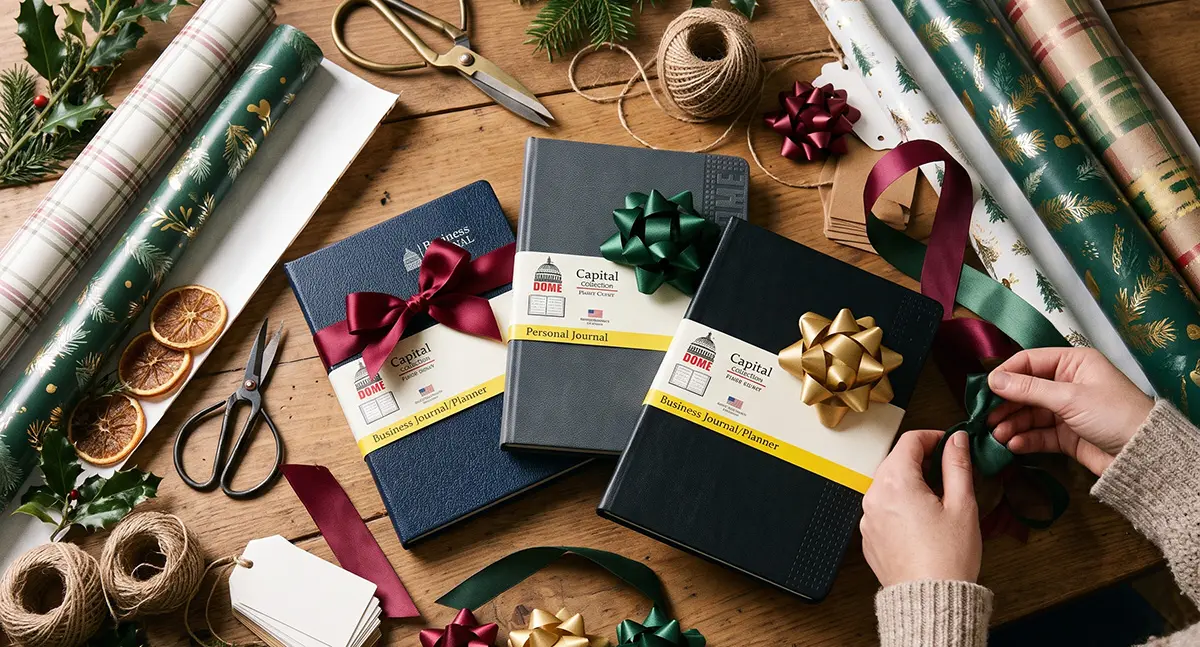
Some gifts are opened, admired, and tucked into a drawer by New Year’s. A journal has a better chance than most of actually being used. It can hold a story, a half-formed idea, a trip worth remembering, or simply tomorrow’s to-do list. That’s what makes it such a personal gift: you aren’t just giving someone a notebook, you’re giving them a place for whatever matters to them.
The tricky part is choosing one. The friend who fills pages with color-coded habit trackers will want something very different from the parent writing down family memories. And the person who sketches their ideas may never reach for the notebook that suits someone who thinks in sentences.
The best place to start isn’t the cover, and it isn’t your own taste. It’s how your recipient already captures their thoughts. This guide walks through the main page formats, a few journaling approaches worth knowing, and how to match both to the people on your list.
Start With the Person, Not the Cover
Before you shop, picture how your recipient already writes things down. Do they write long notes or quick lists? Do they sketch in the margins, tape in ticket stubs, or rework their plans until the page looks just right? Would they enjoy designing their own page layouts, or would they rather open a notebook and start writing?
Think about where the journal will live, too. A notebook that stays on a nightstand does a different job than one that rides along in a work bag or backpack.
You don’t need to know exactly what they’ll write. You’re looking for a format that welcomes the habits they already have, rather than one that asks them to adopt new ones.
Finding the Right Page: Five Formats Explained
The cover makes the first impression, but the pages decide how a journal feels to use day after day. Here’s what each common format does well, and who tends to love it.
Lined Pages for People Who Think in Words
Lined paper is the classic for good reason. It suits anyone who works through ideas in paragraphs, keeps a daily diary, drafts stories, writes letters, or keeps running lists. The lines keep handwriting tidy and give the page a ready-made structure without deciding what goes on it. Your recipient can write about their day, keep reading notes, or plan next week without setting anything up first.
For many writers, that’s the appeal: none of the pressure of a completely blank page, and none of the setup a custom layout requires. Our guide to lined and blank journals goes deeper on the difference.
Dot-Grid Pages for Layout Creators and Visual Planners
Dot-grid notebooks are printed with a light pattern of evenly spaced dots. The dots give just enough guidance to draw straight lines, boxes, and columns, then stay out of the way of sketches and hand lettering. That’s why they’re a favorite for weekly spreads, habit trackers, mind maps, and notes that mix words with diagrams.
One distinction is worth knowing. Dot-grid is a page format, while Bullet Journaling is a method. The Bullet Journal method uses short entries and simple symbols to organize tasks, events, and notes, and it works in any notebook, including a lined one. So choose dot-grid for someone who has said they want to design their own layouts, not just because you’ve seen beautiful spreads online.
Square-Grid Pages for Structure and Alignment
Grid pages, often called graph paper, are made for people who like order. Engineers, analysts, designers, and dedicated planners often prefer them for tables, measured diagrams, and lists that line up neatly. If your recipient’s current notebooks are full of boxes and carefully drawn columns, grid paper will feel like home.
Blank Pages for an Open Canvas
Blank pages offer complete freedom. They’re a natural fit for artists, visual thinkers, and anyone who mixes writing with drawing and wants to decide where everything goes. If your recipient tends to ignore printed lines, or draws diagrams that sprawl across the whole page, let that guide your choice, even if lines suit your own writing better.
Guided Journals for People Who Want a Starting Point
Guided journals come with printed prompts, questions, or themed pages. They can be a lovely gift for someone who wants to start writing but freezes in front of an empty page.
The theme matters, though. Questions about family history, travel, or daily gratitude might be exactly right for one person and feel like homework to another. If you’re not sure, there’s a middle path: give an open journal and tuck in a card with a few optional prompts. They get a place to start and the freedom to wander as the months go on.
Match the Journal to the Way They Think
You don’t need a journal labeled for a specific purpose. Most journaling techniques work beautifully in an open notebook. Instead, imagine how your recipient might use one, then choose the format that leaves room for it.
For the Reflective Writer: The Daily Check-In
Some people understand their day better once they’ve written about it. For them, a journal becomes a few quiet minutes of looking back. Simple questions make a good starting point: What stood out today? What am I still thinking about? What do I want to remember?
A lined journal is usually the right fit, especially for someone who writes in full sentences. Leave the schedule up to them. A reflective journal works just as well three nights a week as it does every night.
For the List Maker: Rapid Logging
Not everyone wants to write paragraphs. Some people think in short bursts: a task, an appointment, a quick note to self. The Bullet Journal method was built with them in mind. Its “rapid logging” approach captures each item as a brief entry marked with a simple symbol, so tasks, events, and notes can share a page and still be easy to scan.
The question for the gift giver is how much setup your recipient enjoys. If they love building layouts, dot-grid is a good bet. If they’d rather jot and go, a straightforward lined page does the job nicely.
For the Person Who Notices Small Joys: Gratitude Notes
A gratitude practice can be as simple as writing down one good thing each day and why it mattered. A favorite conversation, a delicious meal, or an unexpected kindness can be the whole entry.
Printed gratitude journals are one option, but many people prefer the flexibility of an open journal, where one day’s entry can be a single line and the next can fill a page. A few of our journaling for self-care prompts, copied onto a card, make an easy companion to the gift.
For the Creative Thinker: Freewriting and Idea Collecting
Writers, makers, and anyone who always has a project going need a place where ideas don’t have to be finished. Freewriting is the simplest technique there is: write without stopping or editing and see what surfaces. Openers like “An idea I keep coming back to…” or “What if…” are often enough to get the pen moving.
Let their existing habits point to the format. If they think in words, choose lines. If their ideas show up as arrows, sketches, and connected bubbles, blank or dot-grid pages may suit them better.
For the Memory Keeper: Stories Worth Saving
Every family has someone who remembers the sayings, keeps the ticket stubs, and has a story from every trip. A journal can become their archive: holiday memories, travel observations, family recipes and the stories behind them, and moments they want to describe in their own words.
Rather than assigning a theme, tuck in a note like “For the moments you’ll want to revisit.” It gives the gift a purpose while leaving the rest up to them.
Where Dome Personal Journals Fit
Every format above has its place. But if you aren’t sure where to start, a well-made lined journal is the most versatile choice of all. It can be a project planner in January, a diary by spring, and a travel log by summer, without ever asking its owner to commit to a single system.
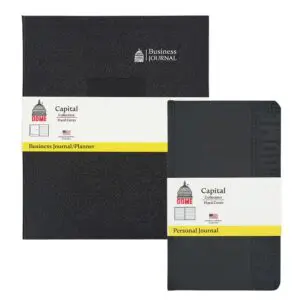
At Dome, we’ve spent more than 80 years making products that help people stay organized, and our Personal Journals bring that same practical craftsmanship to everyday writing. Every journal is made in the USA with 192 lined pages of thick, 60-lb acid-free paper that resists bleed-through. A lay-flat design keeps the book open on the desk, so writing is comfortable from the first page to the last. A ribbon bookmark holds their place, and an expandable inner pocket keeps receipts, cards, and keepsakes close.
Each journal comes in classic black or modern gray, in two sizes and two cover styles, so you can match it to the way your recipient likes to write and carry a notebook.
The Portable Companion: 5 × 8 Softcover
Light, slim, and flexible, the 5 × 8 softcover slips easily into a tote, backpack, or work bag. It’s a great choice for students, commuters, and minimalists who want quality without bulk.
The Desk and Bedside Classic: 5 × 8 Hardcover
The same compact size with a sturdy embossed hardcover that protects the pages on the go and looks right at home on a nightstand or a coffee shop table. It’s well suited to reading notes, morning reflections, and travel journaling.
The Full-Page Thinker: 8 × 10 Hardcover
For writers who like room to spread out, the 8 × 10 hardcover offers a generous page for long-form journaling, memoir drafts, project planning, or detailed goal tracking.
The Flexible Workspace: 8 × 10 Softcover
All the writing space of the 8 × 10 with a lighter, flexible cover, made for people who want a big page at their desk without the weight of a hardcover.
Still deciding? Our Personal Journal decision guide compares every size and cover side by side.
Make It Personal Without Making It an Assignment
How you present a journal matters as much as which one you choose. Instead of writing on the first page, slip a small card inside the front cover so the journal stays entirely theirs. A message like “I thought you might enjoy a place for your ideas, whatever they turn into” keeps the invitation open.
A few small additions turn a notebook into a ready-to-use gift: a pen in their favorite color, a card with two or three optional prompts, or something tied to their interests, like a cookbook for the recipe collector or a map for the traveler.
Most of all, leave room for them to decide what the journal becomes. They don’t have to write every day, make beautiful pages, or show anyone what’s inside.
Choose a Journal That Feels Like Them
Sometimes the right gift is a dot-grid notebook for custom layouts. Sometimes it’s blank pages for drawing, or a guided journal with questions that spark a story. And for anyone who wants a straightforward place to write, a lined journal is hard to beat.
Explore the full Dome Personal Journal collection. Every journal is made in the USA, and orders of Dome journals over $75 ship free, which makes it easy to check off everyone on your list (and maybe pick up one for yourself).
Because the best gifts aren’t just opened. They’re filled.